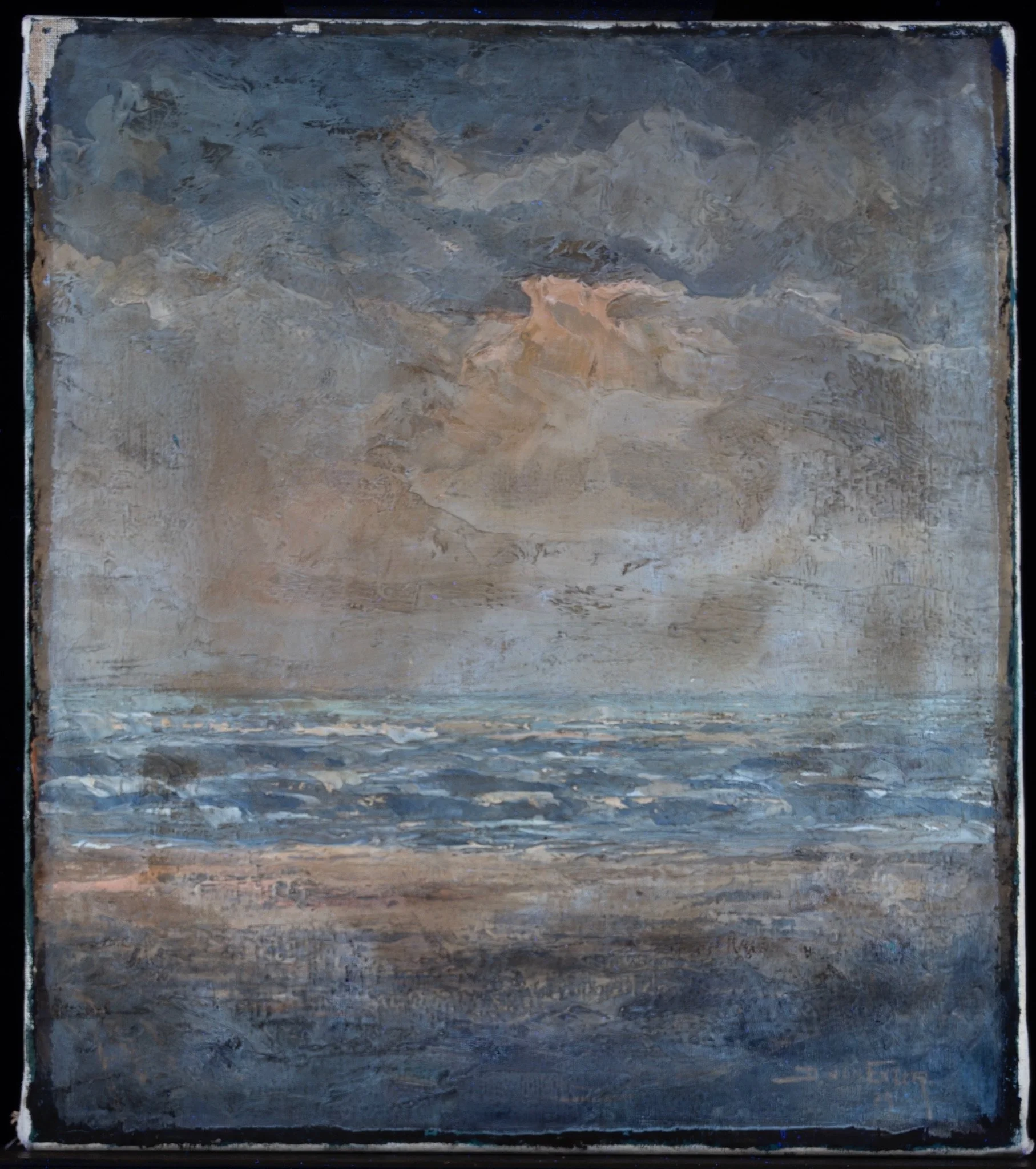
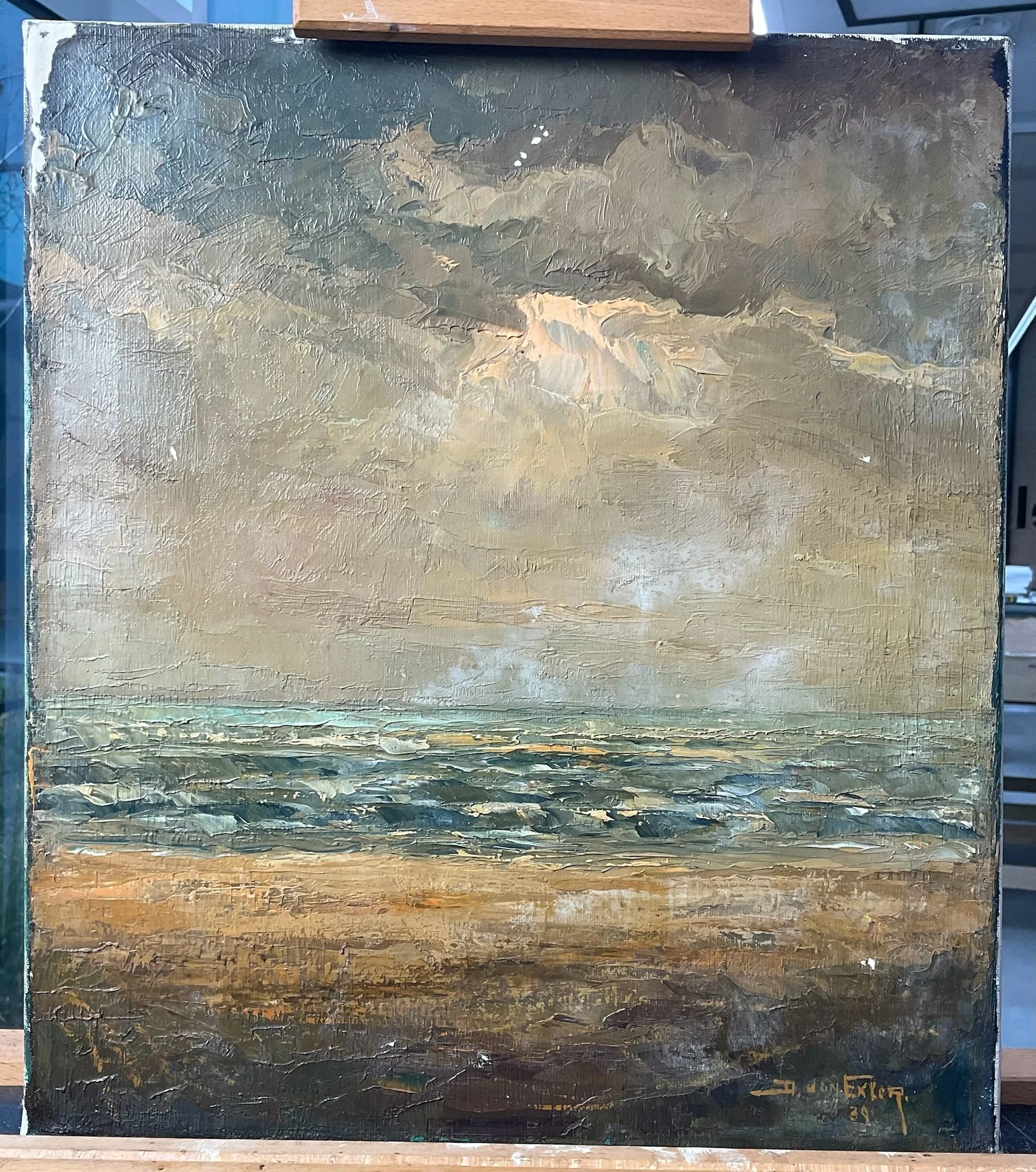
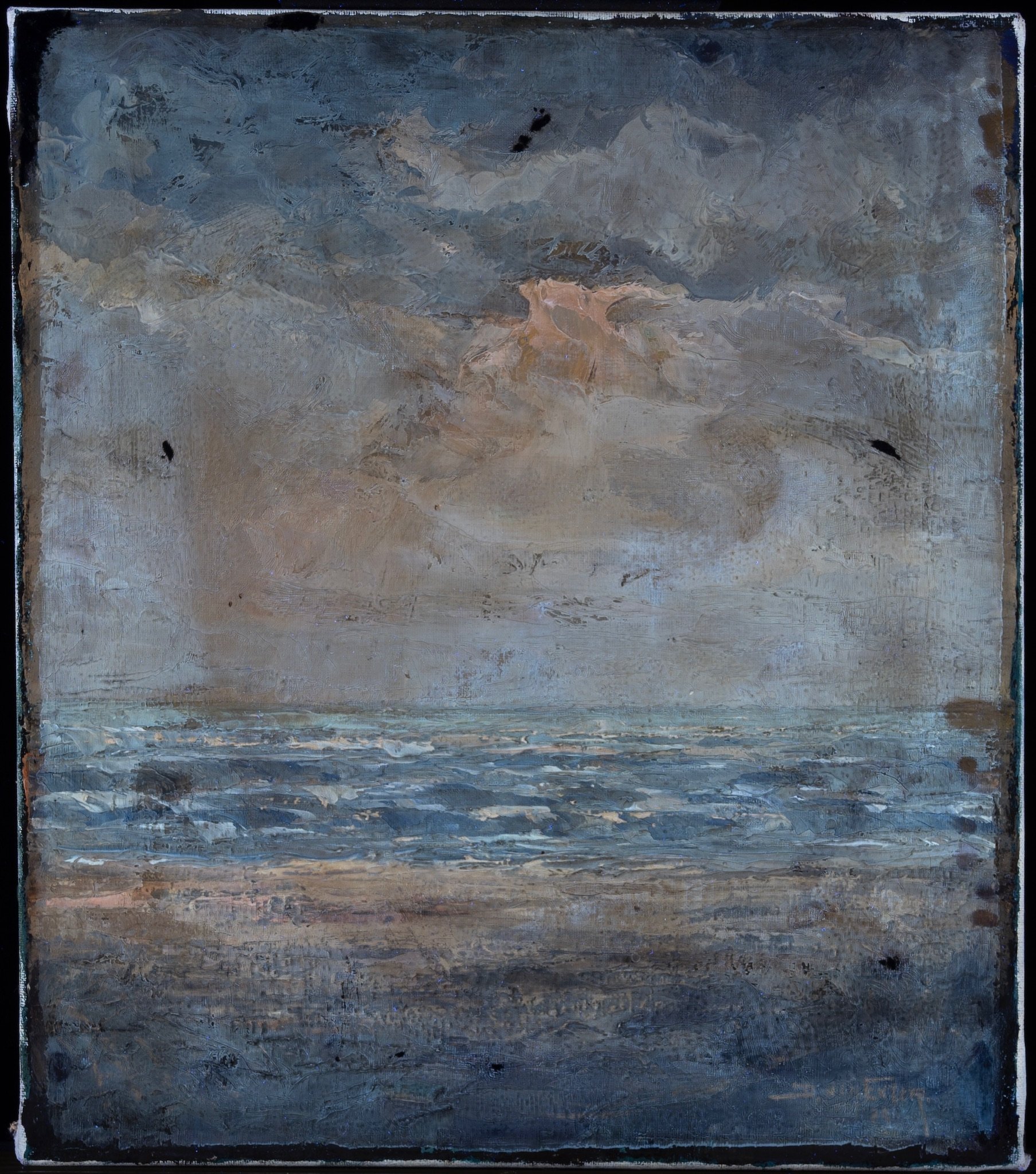
Restoration of a 20th century seaviewPhotography Yara Broekhoff
Client Cultural Heritage Agency of the Netherlands (RCE)
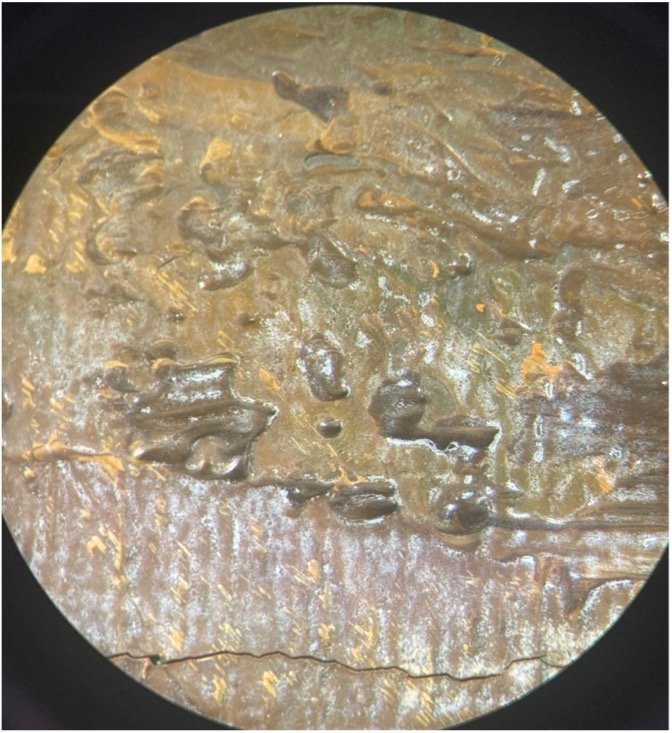
Crazing on the top part of the painting (left) and crazing on the bottom part of the painting (right)
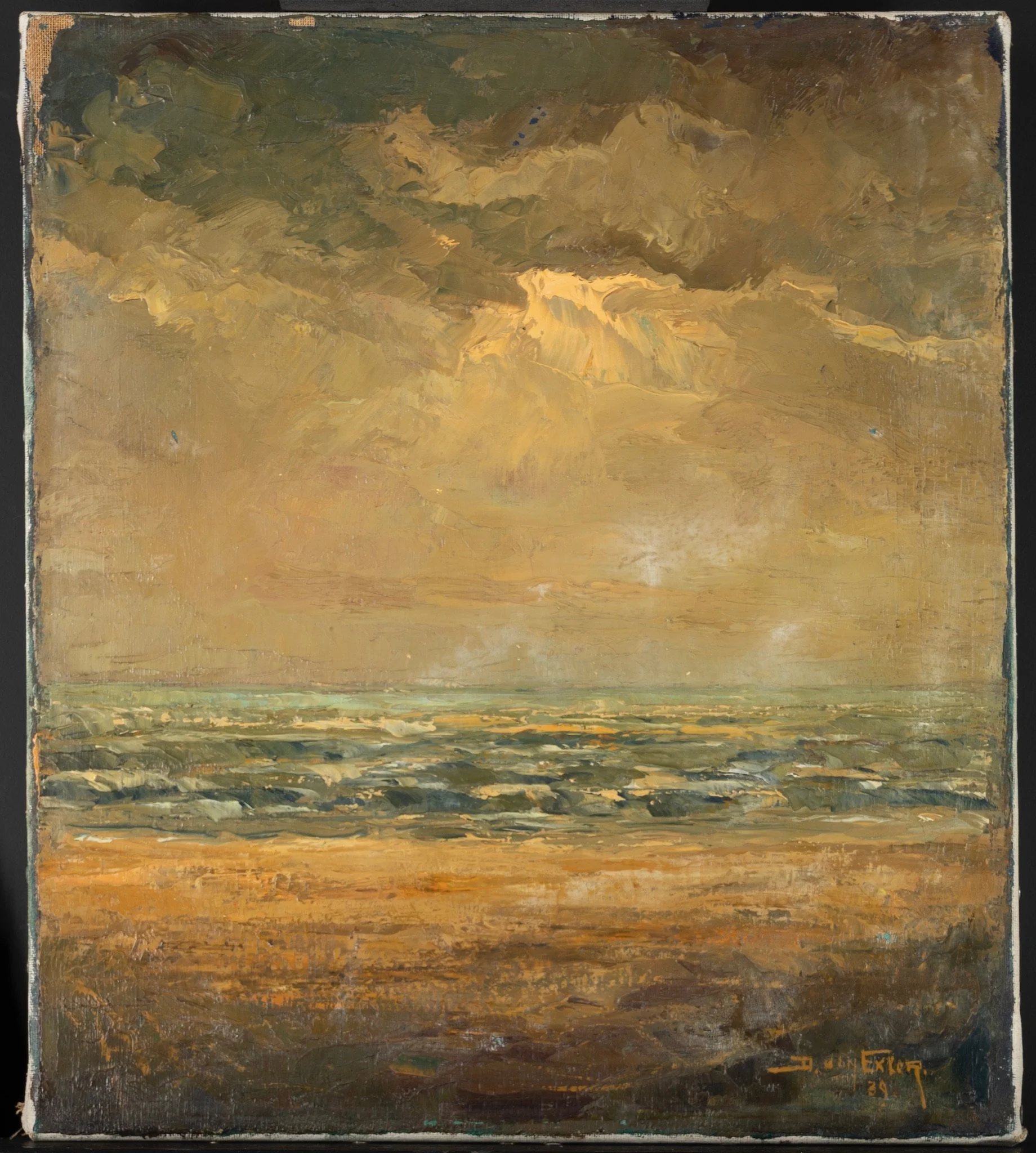
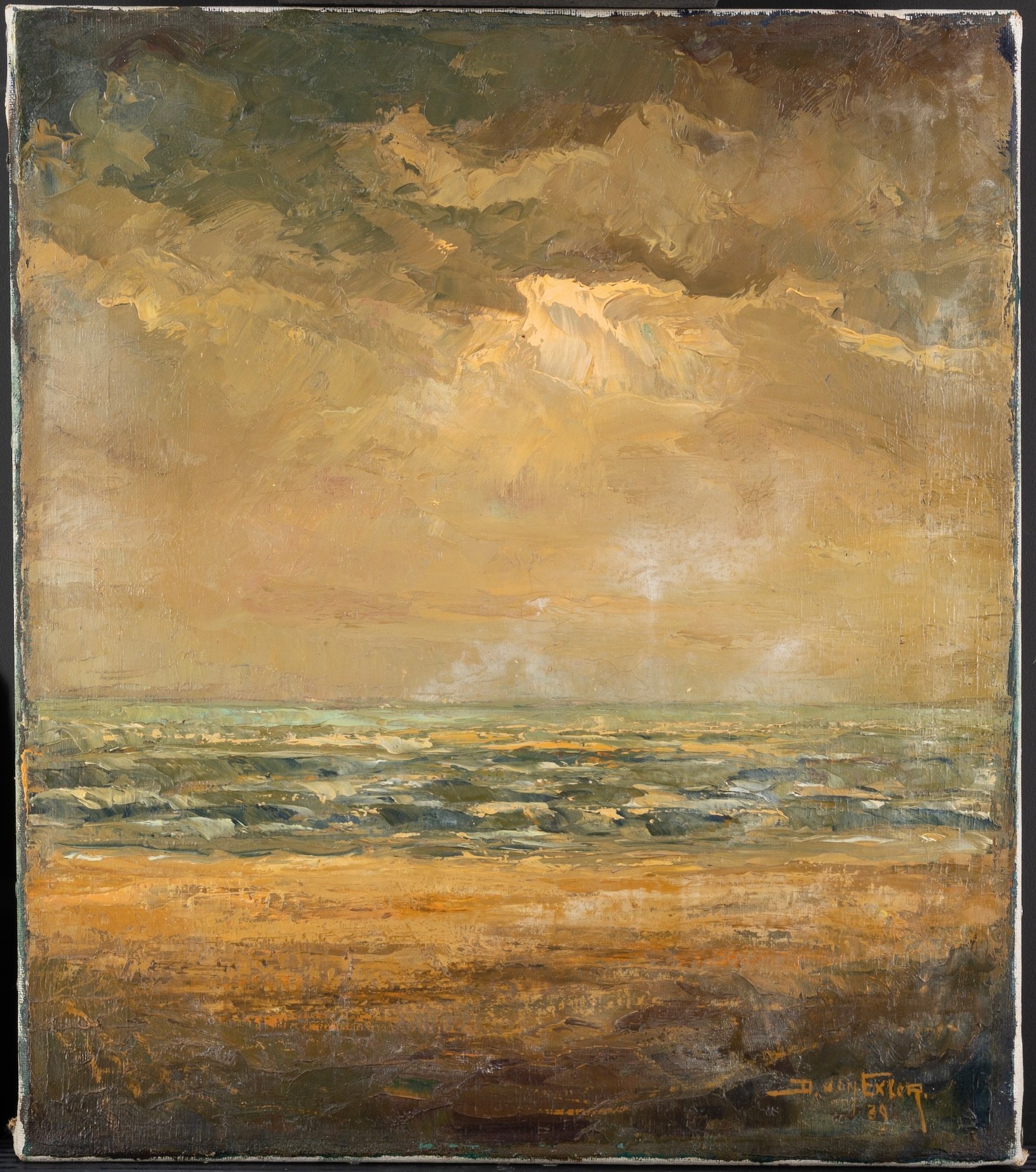

The lacuna in the upper left corner and white areas due to the crazing of the varnish
-
Title: Zee met zon door wolken
Artist: Dirk den Exter (1903-1953)
Date: 1917
Object type: Painting
Object number: K440
Material: Oil on canvas
Dimensions: 38.2 x 33.2 cm
Collection: Cultural Heritage Agency of the Netherlands (RCE)
-
Paint losses
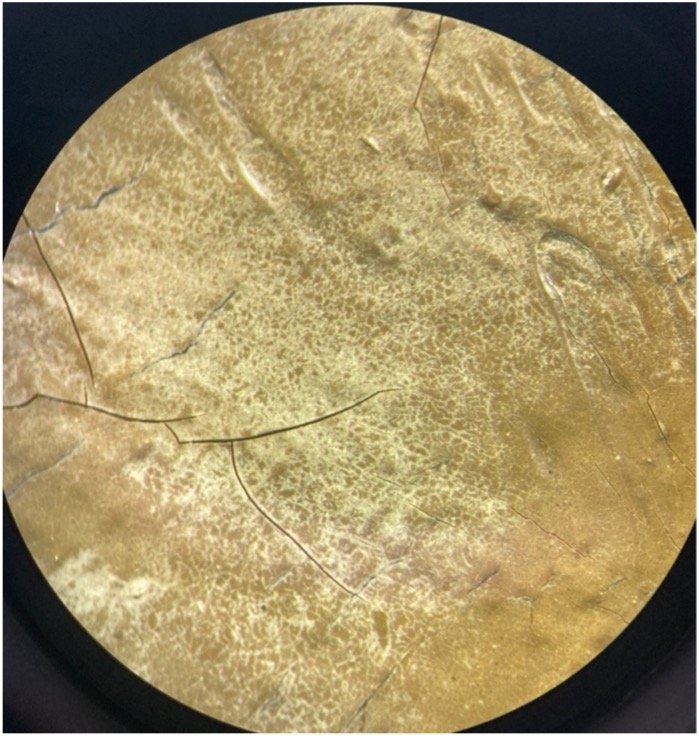
Blanching (crazing) of the varnish
-
Aim: to restore the aesthetic integrity and visual continuity of the painting.
1. Surface dirt removal
The painting was first dry cleaned, after which an aqueous cleaning solution was used to obtain an evenly cleaned surface.
2. Varnish removal
The varnish contained multiple areas that contained micro-cracks that, when observed through the microscope, formed a ‘webbing’ effect. These micro-cracks translate to the visual effect of white areas (blanching) on multiple areas of the work. It was decided to remove the varnish because of these white areas, hopefully allowing the work to gain more continuity and aesthetical value.
However, after testing multiple free solvents, free solvent mixtures, and gels, the varnish was deemed so persistent to be able to be removed. Some aggressive gels were successful in the removal of the varnish but were too aggressive for the oil paint layer under the varnish layer. Accepting the fact that the varnish and oil paint layer could not successfully be separated, a new plan was formulated: saturating the varnish layer with an additional varnish, hopefully diminishing the visual effect of the white areas. There were multiple varnish tests involved, subsequently choosing a resin (dissolved in a mixture that partly existed from aromatic solvents).
3. Fillings and retouchings
The biggest lacuna in the upper left corner was filled with the proper materials. Although a big part of the paint loss in that area was present in the frame of the work, it was decided not to remove it from the frame: after evaluation, the flake was deemed too brittle to be removed and consolidated in the lacuna. Other lacunae were filled as well, after which they were isolated. Afterward, the areas were retouched with pure pigments and resin in ethanol.
4. Varnish
The varnish layer that was tested and chosen during step 2 will be applied to the painting to saturate the underlying varnish and its blanched areas.
5. Final touches
The frame will receive some more padding, to protect the flake of the painting that is present in one of the corners from the painting and vice versa. The painting will be framed and will receive a backing board.
-
![]()
Before treatment
-
![]()
Before treatment, UV
-
![]()
After surface dirt removal and application of fillings
-
![]()
After retouching
-
![]()
After retouching, UV